

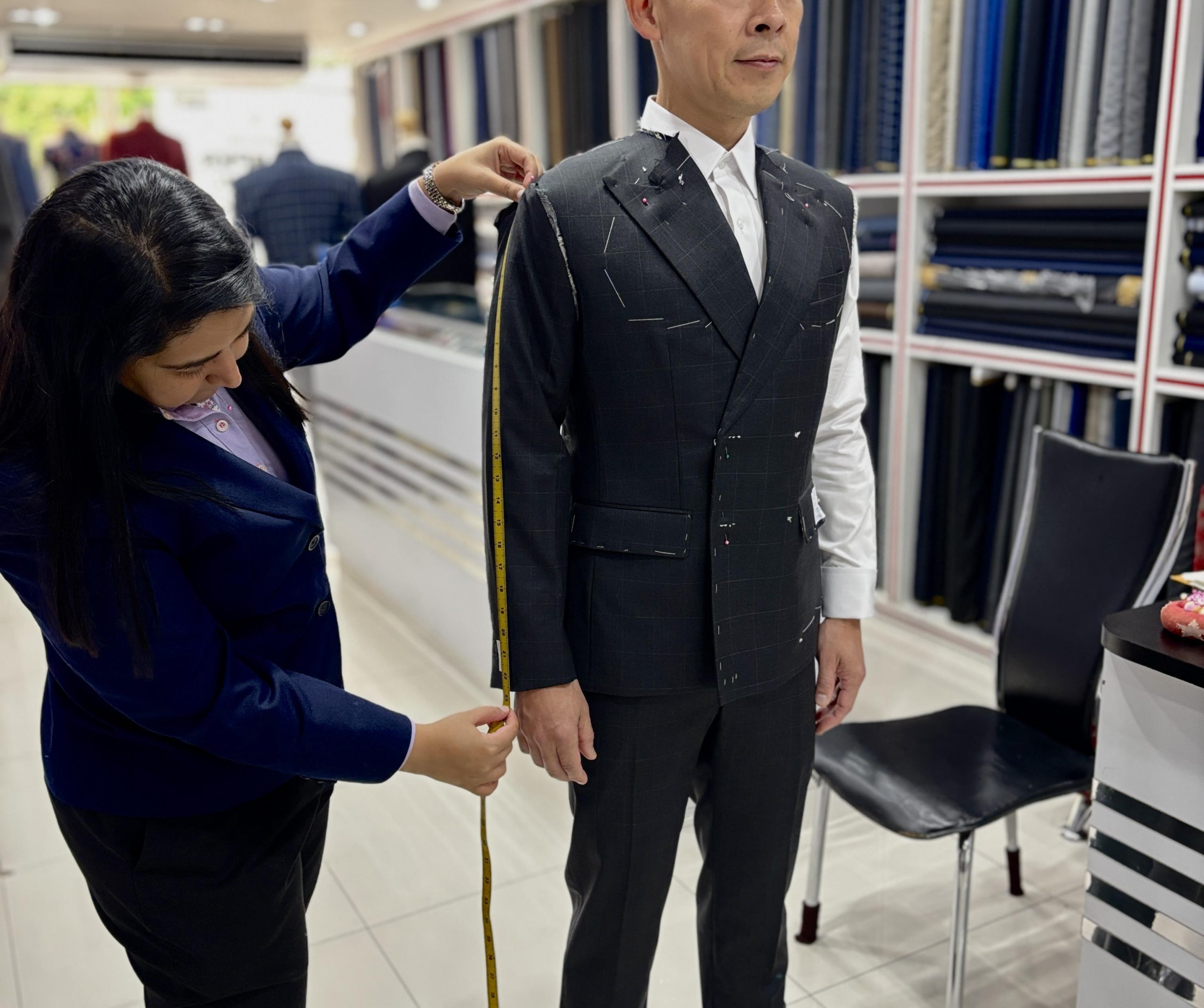
A suit fitting decision log turns multiple appointments into a controlled review process. For each issue, record what was observed, the condition in which it appeared, the agreed adjustment, and the next checkpoint. The value of another fitting is not the visit itself; it is the opportunity to test whether a previous decision solved the intended problem without creating a new one.
This article is not a full bespoke journey or a guide to diagnosing garment construction. It focuses on continuity. The Savile Row Bespoke Association overview of the bespoke process shows that a bespoke garment moves through staged work under a cutter’s supervision.
Why Continuity Matters Between Fittings
Memory tends to preserve conclusions but lose conditions. A sleeve may have felt restrictive while reaching forward, not while standing. A trouser length may have looked different with another shoe. Without that context, the next appointment can reopen a settled issue or judge a change under different conditions.
Separate Observations From Requested Solutions
Write “front pulls when buttoned” before writing “let out the waist.” The first phrase describes evidence; the second proposes a solution that may or may not address the cause. Keeping them separate lets the tailor interpret the garment as a whole and makes the later check more honest.
A useful entry has five fields: area, observation, test condition, agreed action, and next check. Keep the language neutral. “Right sleeve shows twisting with the arm relaxed” is more useful than “right sleeve is wrong.”
Record the Test Condition
Note posture, movement, fastening, shoes, shirt, and anything carried in a pocket. Repeat the same condition at the next fitting when practical. Comparisons are weak when the first observation was made while walking and the second while standing rigidly in front of a mirror.

Use One Issue Per Log Entry
Do not combine collar position, sleeve length, waist comfort, and trouser break into one paragraph. Separate entries make it possible to resolve one item while another remains open. They also reveal dependencies: changing jacket balance may alter how the fronts and hem appear, while changing trouser height can affect perceived length.
What to Capture After the First Fitting
Record only meaningful observations and agreed checkpoints. Include areas that require another test, items the tailor considers resolved, and anything dependent on the next construction stage. Avoid cataloguing every temporary wrinkle in a partly made garment.
The log becomes most useful inside a fitting conversation that converts observations into agreed checkpoints. Read back the important item in plain language before leaving. Both sides should understand what will change and how the result will be judged later.
How to Verify a Change at the Next Appointment
Start by repeating the original test before adding a new preference. If the entry concerned movement, move in the same way. If it concerned closure, fasten the jacket under similar conditions. Then mark the item resolved, monitoring, or open. “Improved” is not the same as resolved when the original symptom still appears.
Track Interactions Between Corrections
Garment areas do not behave independently. A change in one place may affect line, comfort, or tension elsewhere. Link entries when one action must be reviewed after another.
Distinguish Resolved, Monitoring, and Open Items
Resolved means the agreed test now passes. Monitoring means the direction is better but needs another stage or repeated movement. Open means the issue remains or the next action is undecided. These labels keep the final appointment focused and reduce the temptation to restart completed discussions.
Photograph Only With a Purpose
A photograph should preserve a specific reference: posture, hem line, sleeve position, or another agreed view. Label the date and issue. Random mirror images are difficult to compare because distance, lens angle, stance, and lighting change the appearance of proportions.
Questions to Ask Before Leaving
Confirm which items will be changed, which are being watched, what clothing to bring next time, and what movement or view should be repeated. Ask whether one correction affects another logged item. A short summary at the end is more reliable than reconstructing the conversation later.
A Simple Final-Review Method
At the last review, work from open items first, then monitoring items, and finally sample a few resolved items under their original test conditions. Confirm the agreed components and any follow-up process. Do not create a new wish list unless a genuinely new issue appears.
A disciplined log remains brief. That is how multiple fittings become cumulative rather than repetitive.