

Authors: Dave and Pinky, Co-owners of Jhasper Fashion.
Published: Sep 30, 2026
You can get a tailored suit in Bangkok by looking for a tailoring service in an area you can return to, with Sukhumvit, Silom and Siam as useful starting points for your search. Choose the service first: alterations for an existing garment, made-to-measure for a new suit based on an adapted pattern, or bespoke for an individual commission. Then confirm the shop’s actual process, appointment availability and arrangements if further adjustments are needed. Your travel schedule matters as much as the first visit.
This guide is produced for Jhasper Fashion, a Bangkok tailoring business. It offers a planning framework for first-time buyers rather than an independent ranking of shops. The aim is to help you understand the tailoring process, prepare for your consultation and decide which service and tailor fit your own requirements.
About the authors
Dave and Pinky are the co-owners of Jhasper Fashion in Bangkok (Meet Dave & Pinky). Through their work with first-time and returning customers, they have seen that choosing a tailored suit often begins with questions about process, timing and fit rather than fabric or styling alone. This guide brings those practical considerations together to help customers prepare for their own tailoring experience.
Key Takeaways
- Start with what you need the suit to do, then ask which service can achieve it.
- Compare locations using the journey you would make for repeat appointments.
- Confirm availability before treating any advertised turnaround as your schedule.
- Compare written proposals for the same garment and scope of work.
- Bring your travel dates, intended use, style references and relevant clothing.
- Agree how fitting feedback, changes and collection will be handled before committing.
- When contacting a tailor, share your requirements and available dates early so the proposed process can be considered around your circumstances.
In This Guide
- Where Can You Get a Tailored Suit in Bangkok?
- Choose the Service Before Choosing the Shop
- Choose an Area You Can Revisit
- Plan Your Visits Around Your Departure
- Build a Shortlist Using Evidence
- Prepare for Your First Visit
- Frequently Asked Questions
- Your Next Step
Where Can You Get a Tailored Suit in Bangkok?
If you are deciding where to get a tailored suit in Bangkok, begin with a practical search area rather than a citywide list of supposedly superior shops. Look around your accommodation, workplace or a transport route you already expect to use. Then identify businesses that describe the service you need and can discuss appointments within your available time.
Use a map to find candidates, each business’s own website to understand its stated offer, and direct contact to check the details for your order. A map listing, promotional package or advertised deal found elsewhere cannot by itself tell you whether a shop can make your preferred garment, whether the advertised price or package includes the materials and construction you expect, whether those options are actually available for your order, or whether the shop can accommodate your travel dates and provide the follow-up you need. An initial enquiry can help you establish those practical details before you build your schedule around a particular shop.
For a visitor, the useful question is: “Can I return here when the garment needs my attention?” For a resident, consider the same question over your working week. A convenient first appointment loses its value if every subsequent visit conflicts with your schedule.
Treat the process as three connected decisions: the right service, a workable location and an agreed appointment plan. Make those decisions together before narrowing your choice on fabric, styling or price alone.
For Jhasper Fashion, the same principle applies: an initial enquiry is an opportunity to understand your requirements and available dates before discussing whether the proposed process is suitable.
Choose the Service Before Choosing the Shop
“Tailored suit” can describe different routes to a garment. Ask what will actually happen to the cloth or existing clothing, who will assess the fit, and what opportunities you will have to comment. A service label is a starting point for that conversation, not a complete specification.
At Jhasper Fashion, this conversation begins with understanding what the customer needs the suit to do and how they expect to wear it. That helps establish which options should be discussed before the customer commits to a particular approach.
Alterations
Alterations change an existing garment. If you already own a suit and want a specific adjustment, bring it for assessment before assuming you need a new one. Explain both the visible issue and how the suit feels in use.
Ask what can be changed within the garment’s existing construction, what the proposed work would leave unchanged, and whether the result would meet your purpose. An alterations consultation is especially useful when you like most of a suit but cannot tell whether a particular concern is practical to resolve.
Made-to-Measure
Made-to-measure commonly starts with an existing pattern that is adjusted for the wearer. For a clearly documented example, Huntsman describes its made-to-measure service as beginning with its own block pattern, adapted to the client’s measurements. That describes Huntsman’s process; it does not establish the method or terms used by every Bangkok shop.
Ask a prospective provider how its starting pattern is adapted, which styling choices are available and how it checks the result on your body. For your decision, the useful detail is the scope of adjustment and review offered for your particular order.
Bespoke
Traditional bespoke centres on an individual pattern and a garment developed for the wearer. The Savile Row Bespoke Association’s account of the bespoke process describes an individually made pattern cut by a master cutter. Its account is a reference for that tradition, not evidence that a Bangkok business follows the association’s standards.
If a shop uses the word bespoke, ask it to explain its own pattern-making, fitting and construction process. Discuss whether that process is appropriate for your requirements and time available. Do not assume a particular number of fittings, amount of handwork or completion date from the label alone.
If Jhasper Fashion is among the providers you are considering, ask Dave and Pinky to explain their own process rather than assuming that the word “bespoke” has a universal meaning. The useful comparison is the actual pattern, fitting, construction and consultation process offered for your order.
Match the Service to Your Situation
Use this planning table to prepare a conversation. It is an editorial decision aid, not a promise that a service will suit every garment or customer.
| Your starting point | Service to discuss | Your practical constraint | Confirm before proceeding |
|---|---|---|---|
| An existing suit needs a defined change | Alterations assessment | Bringing the garment and returning to check it | What can change, what cannot, and the proposed result |
| You want a new suit and like a provider’s existing silhouette | Made-to-measure | Availability for the provider’s fitting process | Pattern adjustments, style options and fitting review |
| You want an individual pattern or extensive design input | Bespoke consultation | Time for the proposed development and review | Actual process, responsibilities and appointment plan |
| You have a fixed departure or event date | Ask which service is feasible before choosing | Limited opportunities to return | Confirmed appointments and the fallback if work remains |
| You are considering Jhasper Fashion but are unsure which route fits your needs | Initial consultation | Your intended use, availability and deadline | The proposed service, process and appointment plan |
A custom suit for first-time buyers should begin with a clear brief. You do not need to decide on a technical category before contacting a shop, but you should understand the proposed category before placing an order.
A Real-Life Example: When the Consultation Helps Define the Suit
A useful consultation does not always begin with the customer knowing exactly what he wants. Sometimes the first step is helping him understand which type of garment fits the occasion.
One example is a local expatriate customer who came to Jhasper Fashion looking for a suit for his own wedding. He knew he wanted to look appropriately dressed for the occasion but was unsure whether he needed a regular suit or a tuxedo.
Dave and Pinky began by discussing the occasion rather than asking him to choose between the two immediately. Because the wedding was a formal event and the bride would be wearing a formal gown, they suggested a modern-fit tuxedo. The recommendation also took into account the customer’s usual wardrobe: he did not regularly wear suits, so his wedding was a particularly significant opportunity to choose something more distinctive than the business suits he might otherwise consider.
The aim was not simply to make the garment more formal. The tuxedo was intended to complement the overall formality of the wedding, work with the bride’s attire and give the groom a look that would stand apart from the other guests.
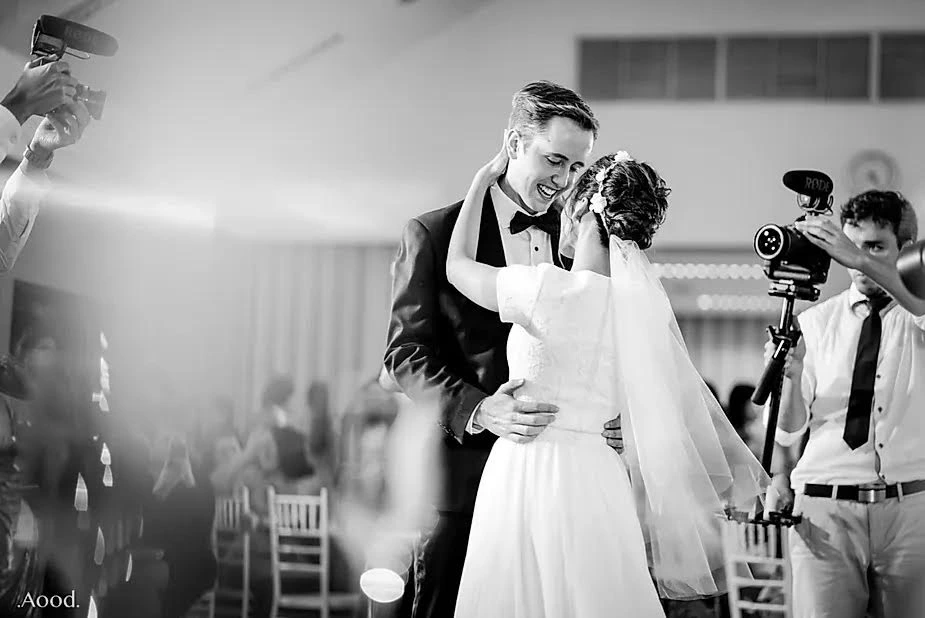
Once the customer was comfortable with the direction, the consultation moved into the details that would make the garment personal to him. Dave and Pinky discussed options for the lining, lapel style and buttons, rather than treating those details as decisions that had to be made without context.
The monogram was another opportunity to personalise the suit. Instead of using only the customer’s name, they discussed incorporating both the groom’s and bride’s names together with their wedding date. This gave the garment a connection to the occasion rather than simply adding a standard personalisation.
The example illustrates why an initial consultation can be useful even when a customer arrives without a clear technical specification. The customer did not need to know whether a tuxedo or regular suit was the correct starting point. By explaining the occasion, his normal clothing habits and what he wanted the garment to represent, he gave the tailor information that could be used to discuss the available options.
For a first-time customer, the useful lesson is to describe the occasion and the outcome you want before becoming too focused on tailoring terminology. Details such as how often you normally wear suits, how formal the event will be, what your partner will be wearing and whether you want the garment to have a personal connection to the occasion can all help shape the consultation.
For the deeper service comparison, use made-to-measure, bespoke, and alterations compared when considering which route fits your needs.
Choose an Area You Can Revisit
The most useful Bangkok tailoring areas for your shortlist are the ones that work with your actual movements. A neighbourhood name does not establish workmanship, value or suitability. Use it to organise your search, then assess individual businesses.
For a Sukhumvit search, Nana and Asok provide recognisable transport reference points. For Silom, start your route planning around Sala Daeng; for Siam, use Siam station as a reference. The official BTS network map identifies these stations and their line connections. It does not establish a shop’s walking distance, opening hours or appointment availability.
Enter the exact shop address into your route planner. Check the final walk as well as the train journey, particularly if you will be arriving with luggage or have accessibility requirements. Ask the shop to confirm its entrance and any access arrangements that matter to you.
When considering Jhasper Fashion, use the same practical test: check the route from your accommodation or workplace and consider whether the journey is convenient for the appointments your proposed order may require.
Do not rule out a business elsewhere in Bangkok simply because it sits outside those three areas. The same test applies: can you get there reliably for the proposed visits, and does the service fit your needs? If you change hotels during your trip, plan from the accommodation you will use at each appointment.
Compare two realistic return journeys rather than trying to rank whole districts. One option may fit naturally around your work or sightseeing; another may require a separate journey each time. Choose with those practical differences visible.
Use Bangkok tailoring areas explained for a closer look at organising a shortlist by location and repeat journeys.
Plan Your Visits Around Your Departure
Getting a custom suit in Bangkok involves more than finding a gap for measurements. Before ordering, establish which parts of the proposed process require your presence and when those appointments can happen. The relevant schedule is the one agreed for your garment, not a general turnaround headline.
Share your arrival, departure and unavailable periods at the start. If the suit is for an event, give that date separately: leaving Bangkok and needing to wear the suit are different deadlines. Ask the shop to explain how cloth availability, the requested design and any further adjustments affect its proposal.
When contacting Jhasper Fashion, providing these dates at the beginning of the conversation can help Dave and Pinky understand the practical constraints before discussing the proposed order and appointment sequence.
Work backwards from the last realistic opportunity to try on the garment. Keep some room between that appointment and departure where your trip allows it. The amount of room needed depends on the work involved; this guide does not prescribe a universal number of days or fittings.
A Real-Life Example: Arranging Appointments Around Travel
A customer’s total time in Thailand does not necessarily mean they are available for tailoring appointments throughout their stay. One Jhasper Fashion customer was in Thailand for three weeks, but his travel plans included time away from Bangkok visiting the islands.
Rather than scheduling appointments based simply on his arrival and departure dates, Dave and Pinky worked around his actual travel itinerary. His first consultation, measurements and fitting were arranged shortly after he arrived in Bangkok. A second fitting was scheduled for the following day, before he left Bangkok for the islands.
When he returned to Bangkok, his final fitting and collection were arranged two days before his flight home. This also left some time available for any final adjustments if they had been necessary. In this case, the suit fitted him well and no further adjustments were required.
The example shows why sharing your complete travel itinerary can be useful when ordering a tailored suit. Your arrival and departure dates are only part of the picture. Letting the tailor know when you will actually be in Bangkok—and when you will be travelling elsewhere—can help the proposed fittings and collection be arranged around the time you genuinely have available.
For the detailed planning sequence, consult a visitor’s suit-tailoring timeline alongside the appointments your chosen provider confirms.
Build a Shortlist Using Evidence
Keep your shortlist small enough to compare properly. Start with businesses that appear to meet your service, location and scheduling requirements. Then send each the same basic brief so that differences in the replies are meaningful.
Look for information that answers your decision, not just attractive photographs. Can the provider explain the proposed garment and service? Does its reply address your available dates? Are the scope of the quotation and the arrangements for changes understandable? An unanswered question is a reason to seek clarification before committing.
If Jhasper Fashion is on your shortlist, sending the same brief to Jhasper can also make the first conversation more productive. Include your intended use, preferred style, available dates, budget range and any fixed deadline so the discussion can focus on what is realistic for your order.
Read reviews as accounts of particular experiences. Check whether a reviewer describes a comparable garment, service and timeframe. A favourable overall rating does not, on its own, show how your order will be handled. Likewise, a photograph can illustrate a style without proving how the garment was made or how it felt to wear.
Compare quotations for the same scope. Record the garment pieces, selected cloth, agreed details, fitting arrangements and any extras separately. Ask what payment stages, changes and after-collection assistance apply. These are questions for the provider, not standard terms that this guide assumes every shop offers.
If two proposals differ, identify the reason before deciding that one is better value. You may be comparing different cloth, different service scope or different responsibilities after collection. A useful shortlist leaves you able to explain why a particular proposal fits your needs.
Prepare for Your First Visit
You can make tailored suit shopping in Bangkok more focused by arriving with a short brief. Describe the situations in which you expect to wear the suit: daily office use, occasional meetings, a wedding or another event. Add the climate and level of formality you have in mind, without assuming one fabric or design is automatically right for every occasion.
This is also the approach Jhasper Fashion encourages for first-time customers: the more clearly you can describe how and when you intend to wear the suit, the more useful the consultation can be. You do not need to know every tailoring term in advance.
Bring a few style references and explain what you like about each one. It may be the overall shape, lapel, colour or the amount of room through the trousers. Separating those preferences helps the conversation move beyond copying a photograph of someone with different proportions.
If available, bring a garment that helps illustrate a preference or fit concern. Explain what works as well as what does not. Bring the shirt and shoes you intend to wear with the suit when practical, and ask what the provider wants you to bring to later appointments.
Set a spending range for the complete order and ask for a written proposal within it. Include your available appointment windows and any firm deadline. If you are unsure about a technical term, describe the outcome you want instead of choosing a label you cannot yet evaluate.
Before leaving, summarise the next agreed step: what is being made or assessed, what is still undecided, who will contact whom and when you need to return. Keep your copy of the order details and appointment information. This gives both sides a shared reference for later conversations.
A Real-Life Example: Using Style References to Refine the Design
Style references can be particularly helpful when a customer has a clear idea of the look they want but does not know the tailoring terms to describe it. One customer came to Jhasper Fashion with several images on his phone showing a particular suit style he wanted to recreate.
The images gave Dave and Pinky a clear starting point. They were able to identify a similar fabric and colour, then discuss the specific details that created the overall silhouette. The customer preferred high-waisted trousers with side adjusters and a more relaxed fit rather than the slimmer fit that many customers request.
For the jacket, he wanted a slightly longer length, very wide peak lapels and a six-button double-breasted front. Together, these choices created the more Italian-inspired silhouette he was looking for.
The example shows why bringing photographs to a consultation can be useful. A tailor can look beyond the general appearance of the suit and discuss the individual elements—fabric, colour, trouser rise, fit, jacket length, lapels and button configuration—that contribute to the look. You do not need to know the technical terms in advance; a good reference image can give both sides a useful starting point for the conversation.
Frequently Asked Questions
Should I contact a tailor before arriving in Bangkok?
Contacting a shop before arrival lets you discuss your needs and available dates before making a journey. Send your intended use, the garment you want and any fixed deadline. Ask whether an appointment is needed and what to bring. Treat the reply as an initial planning conversation; confirm the actual order and schedule once the provider has assessed your requirements.
If Jhasper Fashion is on your shortlist, contacting Dave and Pinky before arrival can also give you an opportunity to explain your requirements and travel dates before planning your visit.
Can I start with a consultation if I do not know which service I need?
Yes, you can ask for a consultation to discuss the options before deciding. Confirm any consultation fee or commitment in advance. Bring an existing garment if you are considering alterations, or explain what you want from a new suit. Ask the provider to set out the proposed service and its limits in plain language before you agree to proceed.
Is a shop near my hotel necessarily the right choice?
A nearby shop may make return visits easier, but location answers only one part of the decision. You still need a suitable service and a workable appointment plan. Compare its proposal with your requirements, and check the journey from any later accommodation too. Convenience is useful when it supports the fitting process; it does not establish the quality of a particular garment.
What if my trip is too short for the proposed process?
Ask the provider to explain which part cannot fit within your available time. You can then consider whether another service meets your real need, whether a later visit is possible or whether to postpone the order. Do not assume delivery after departure solves an unresolved fit issue. Agree any remote follow-up, additional costs and responsibilities before relying on that arrangement.
Should price determine which shop I choose?
Use your budget to define a realistic shortlist, then compare what each quotation includes. The same headline price may cover different garment pieces, cloth or follow-up arrangements. Ask for those differences to be explained in writing. Choose a proposal you understand and can afford, with a process you can attend, rather than treating either a low or high price as proof of suitability.
Do I need a separate plan if I live in Bangkok?
Residents still benefit from planning appointments around work, travel and the date the suit is needed. Being nearby does not guarantee that a provider has immediate availability or that changes can be completed without another visit. Give the shop your real availability, confirm the proposed stages and keep an agreed next step after each appointment, just as a visitor would.
Your Next Step
Use this Bangkok suit tailoring guide to write a short enquiry: what you need, which service you want to discuss, where you can return and when you are available. Send it before building your trip around an assumed schedule.
If Jhasper Fashion is on your shortlist, explore its custom tailoring in Bangkok and ask which process and appointments fit your brief. The next step is simply to start the conversation. Share what you need, how you intend to use the suit, your available dates and any deadline that matters to you. Dave and Pinky can then discuss the process, options and appointments that may fit your circumstances.