

Before ordering a custom suit in Bangkok, ask the tailor to define the tailoring method, who takes the measurements and controls the pattern, the exact cloth and construction, the purpose of each fitting, the realistic completion schedule, the full written price, the deposit terms and what happens if the finished garment does not match the agreed fit or specification. Record the answers before paying, especially when your departure date limits the time available for corrections.
Key Takeaways
- Ask what the shop means by bespoke, made-to-measure or alteration in its own process.
- Record the cloth reference, fibre content, construction and included components.
- Request a fitting plan with a purpose and correction window for each visit.
- Compare written totals and inclusions, not headline prices alone.
- Read deposit, cancellation, alteration and remake terms before payment.
- Treat a vague answer as a prompt for evidence, not automatic proof of poor work.
Table of Contents
Start with a Clear Order Brief
The best questions begin with what the garment must do. Tell the tailor the occasion, climate, frequency of wear, preferred silhouette, comfort concerns, budget range and firm travel dates. Bring useful style references, but explain which feature you like rather than asking for an exact copy.
Give every shop the same brief if you are comparing proposals. Otherwise, one quotation may describe a two-piece business suit in a basic construction while another includes a waistcoat, different cloth and more service. The totals are not comparable until the scope is comparable.
If you are still comparing the whole service rather than preparing for one consultation, use Jhasper’s practical guide to choosing a tailor in Bangkok. This article focuses on the questions to settle before an order or deposit.
What Type of Tailoring Are You Buying?
Ask the shop to describe the work, not simply name it. “Bespoke”, “made-to-measure” and “custom” are not used consistently across every market.
The Savile Row Bespoke Association’s description of its bespoke process uses an individually handmade pattern, cut by a Master Cutter, with the garment made under that cutter’s personal supervision. This is a useful reference for understanding the traditional term, but it does not make every business outside Savile Row subject to the same definition.
Ask:
- Is an individual pattern drafted, or is an existing block adjusted?
- Which parts of the process are completed specifically for this order?
- At what stage can balance, posture and proportion still be corrected?
- Is the pattern or fit record retained for future orders?
A clear answer describes the actual workflow. A label repeated without an explanation is not enough information to approve the order.
Who Takes the Measurements and Creates or Adjusts the Pattern?
Find out who performs each technical hand-off. The person taking measurements may not be the person who develops the pattern, cuts the cloth, marks the fitting or approves the final garment. That is not automatically a problem, but responsibility should be clear.
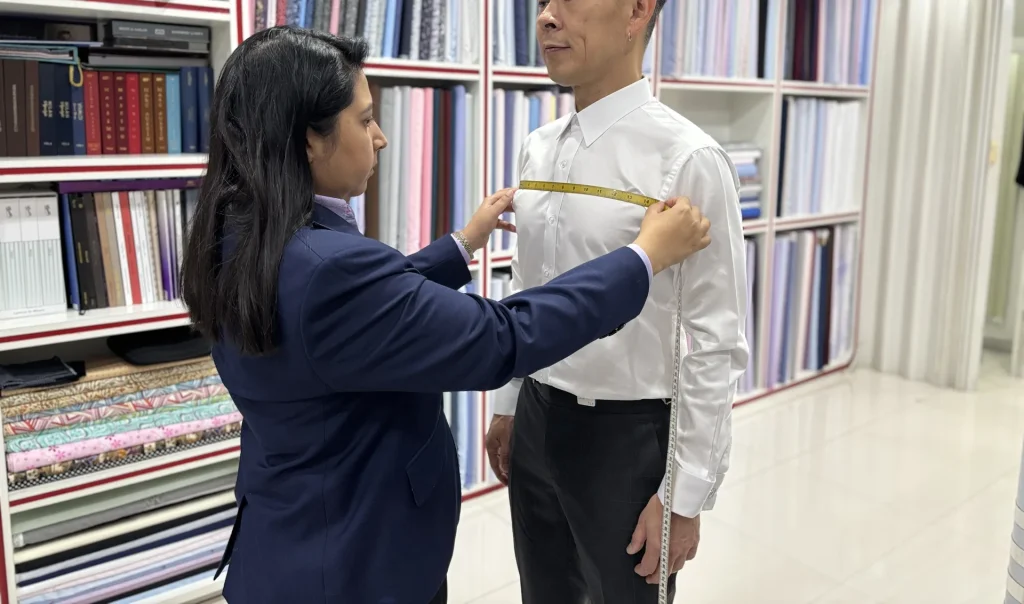
Ask who will measure you, who will interpret posture and asymmetry, where the garment will be produced, who will attend the fittings and who can authorise a correction. If a concern appears later, you should know who owns the next decision rather than being passed between unnamed stages.
What Should You Ask About the Fabric?
Request information about your order: fibre composition, mill or merchant reference where available, cloth code, stated weight, weave, colour and care requirements. Origin, fibre content and the location of the merchant are separate facts; words such as “Italian”, “premium” or “luxury” do not answer all three.
Official textile-labelling rules vary by jurisdiction. For example, UK textile-labelling guidance requires fibre content to be stated for products within its scope. This does not govern a Bangkok order, but it illustrates why a specific composition is more useful than a marketing adjective.
Also ask how the cloth is expected to behave in your real conditions. Weight alone does not determine breathability, crease recovery or durability. Ask what the swatch can demonstrate, what depends on the finished construction and what care the completed garment will require.
What Construction Is Included?
Ask which internal structure, lining, buttons and finishing are included in the quoted price. Jacket descriptions such as fused, half-canvas and full-canvas refer to how support is used inside the front, but the label alone does not prove that the option suits your climate, budget or expected use.
Useful questions include:
- Where is fusible material or canvas used?
- What is the lining composition and coverage?
- Are functional buttonholes, special buttons or hand-finished details included or optional?
- Can the shop show a comparable finished garment and explain what can actually be inspected?
The useful answer connects construction to the brief and states the trade-off. The most expensive option is not automatically necessary for every customer.
How Many Fittings Are Planned—and What Is Each One For?
Ask for the purpose of each planned visit rather than treating the number of fittings as a quality score. The appropriate sequence can depend on the tailoring method, garment complexity, body considerations, workshop schedule and whether the shop already has a proven pattern for the client.
Confirm what stage the garment will be in, what can still be changed, who records the observations and when the correction will be checked. Ask whether the quoted schedule leaves room for an additional review if the first correction does not resolve the issue.
What Is the Realistic Production Timeline?
Ask for a dated sequence that distinguishes consultation, measurement, cloth confirmation, first fitting, later corrections, final inspection and collection. A promised “completion” date may mean the first finished try-on rather than a garment that has passed every agreed correction.
A short turnaround is not automatically a warning sign. It becomes a concern when the shop cannot explain the stages, the trade-offs or the contingency if the garment needs more work. Travellers should protect a buffer before a flight, meeting or wedding instead of making collection the last fixed appointment of the trip.
What Is Included in the Quoted Price?
Request a quotation that identifies the complete scope. It should be possible to see what you are buying without reconstructing the offer from messages or memory.

Confirm:
- garment type, quantity and included pieces;
- cloth reference or agreed material specification;
- construction, lining, buttons and custom details;
- fittings and standard alterations included;
- taxes, delivery or shipping charges;
- payment amount and payment schedule;
- circumstances that could change the total; and
- cancellation, alteration, remake and refund conditions.
There is no responsible universal answer to what a custom suit in Bangkok “should cost” without a date, a comparable specification and a clear service scope.
What Are the Deposit and Cancellation Terms?
Understand the terms before payment and ask for clarification. Confirm whether the payment is refundable, which decisions trigger cutting or other irreversible work, what happens if the customer cancels, and what happens if the shop cannot meet an agreed requirement.
Also ask how missed appointments, late design changes and a changed departure date affect the schedule or price. A policy can be strict and still be clear; the problem is discovering the rule only after money has changed hands.
What Happens If the Finished Suit Does Not Fit?
Agree on the correction process before ordering. Ask how a fit concern should be reported, how quickly it must be raised, who assesses it, which alterations are included, when a remake may be considered and who pays any shipping cost when the customer has left Bangkok.
Distinguish an agreed fit or specification problem from a new preference introduced after completion. A written policy should explain the next step without promising that every concern has the same remedy.
Pre-order Question Checklist
| Decision area | Question to record | What a useful answer contains |
|---|---|---|
| Method | What does “bespoke” or “made-to-measure” mean in this order? | Pattern method, production path and fitting stages |
| Responsibility | Who measures, patterns, fits and approves corrections? | Named roles and a clear hand-off |
| Cloth | What is the fibre content and cloth reference? | Written composition and identifiable reference |
| Construction | What internal structure and finishing are included? | Location, materials, limitations and options |
| Fittings | What will each visit test? | Stage, purpose, recorder and next checkpoint |
| Timing | What date is reserved for corrections before departure? | Dated sequence with contingency time |
| Price | What is included and what can cost extra? | Itemised scope and change conditions |
| Deposit | When does it become non-refundable? | Written trigger and cancellation terms |
| Fit problem | What happens if an agreed issue remains? | Reporting method, assessment and remedy process |
| Evidence | Can I see comparable real work or documents? | Relevant, verifiable examples with permission |
Do not expect every answer to be identical across businesses. The decision test is whether the answer is specific enough to record, relevant to your order and consistent with the written terms.
Frequently Asked Questions
Should I Make the Payment at the First Consultation?
Only when the garment, cloth, construction, price, schedule and payment terms are clear enough for you to approve. A payment is not automatically suspicious, but you should know whether it is refundable, when work begins and what happens if the scope or deadline changes. If important answers remain verbal or uncertain, request the written terms before paying.
Is a Verbal Quotation Enough for a Custom Suit?
A written quotation is safer because custom orders contain details that are easy to remember differently. Record the garment, cloth reference, construction, included pieces, fittings, alterations, taxes or delivery charges, payment stages and possible extras. The document does not need to be complicated; it needs to make the agreed scope clear.
What If a Tailor Cannot Answer a Technical Question Immediately?
That is not automatically a red flag. A careful consultant may need to check with a cutter, workshop or supplier. Ask when and how the answer will be confirmed, then wait for the written clarification before approving the affected part of the order.
Final Takeaway
The most useful pre-order questions turn promises into a record: what is being made, how it will be made, what it costs, when it will be reviewed and who is responsible if the result needs correcting. Compare the clarity of those answers with your purpose, budget and travel schedule.
If you would like to discuss a real order brief, bring your questions, intended use, budget and Bangkok travel dates to Jhasper Fashion’s bespoke tailoring service. A consultation can help identify suitable cloth, construction and fitting options, but you are not obliged to order during the first conversation.
Author and Editorial Disclosure
Authors: Dave and Pinky, Co-owners of Jhasper Fashion. About Jhasper Fashion
Last reviewed: 2026-09-26
Editorial disclosure: This educational guide was written and reviewed by Dave and Pinky, co-owners of Jhasper Fashion, drawing on their practical experience in tailoring consultations. It provides general guidance for comparing tailoring services and does not claim that one tailor is suitable for every customer.