

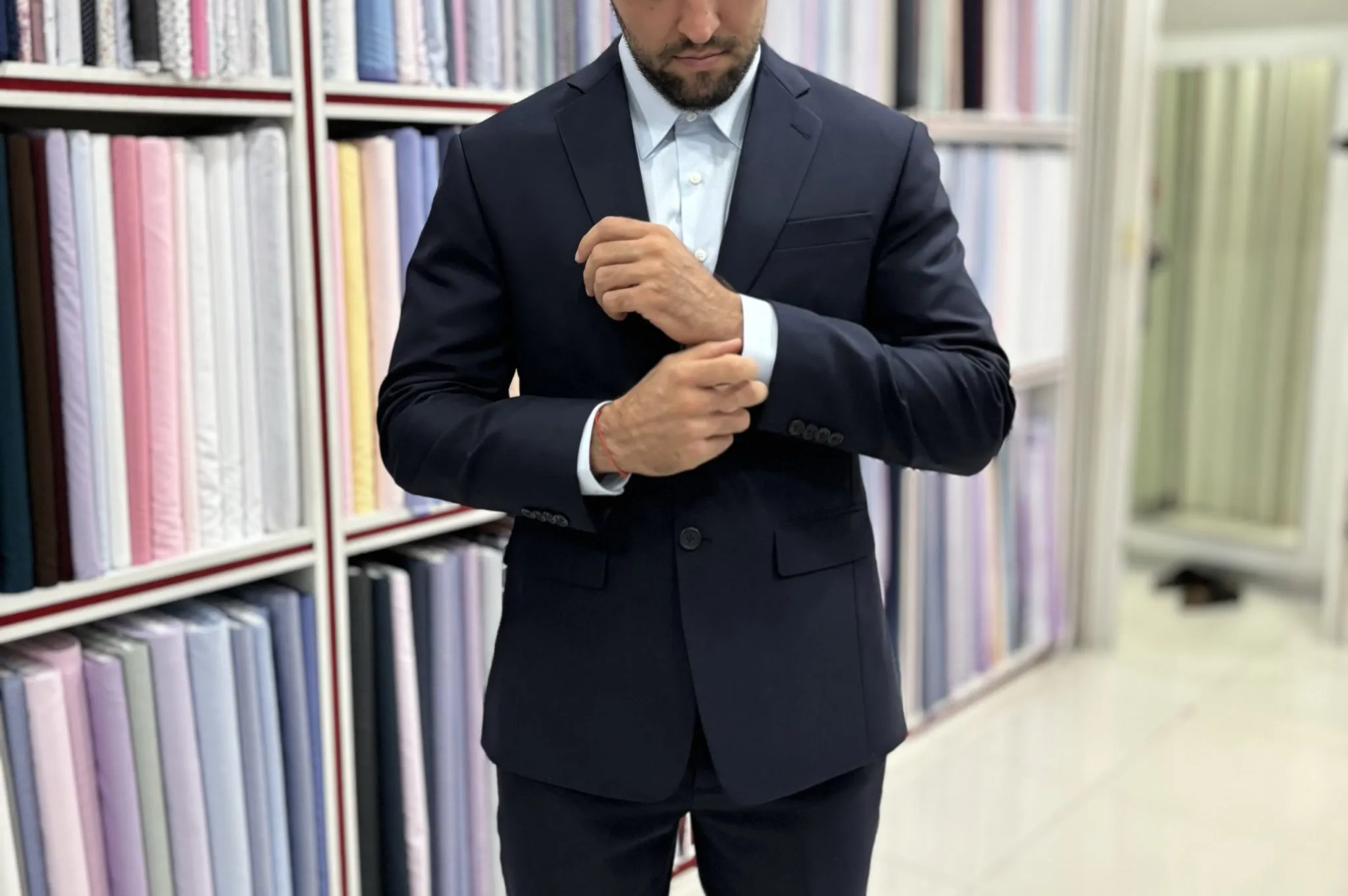
Judge the quality of a tailored suit by checking three separate things: how the whole garment balances on your body, whether its construction matches the specification you approved, and whether the finishing is consistent and secure. Inspect the suit while standing naturally, sitting, walking and moving your arms. Do not use tightness, fabric price or one posed photograph as a shortcut for quality; the correct result depends on the agreed style, your posture, the cloth and the stage of the fitting.
Key Takeaways
- Start with the whole silhouette before diagnosing a single wrinkle.
- Check shoulders, collar and sleeve pitch in a natural stance and in movement.
- Judge the jacket and trousers as one balanced outfit.
- Confirm construction against the written order rather than assuming one method is always superior.
- Separate objective fit or finishing findings from a new style preference.
- Record unresolved items and test them again under the same conditions.
Table of Contents
Start with Overall Balance
Look at the complete suit from the front, side and back before focusing on small details. Stand as you normally stand rather than forcing your shoulders back or holding your arms rigidly. The jacket should look level for the intended cut, the fronts should hang cleanly, and the trousers should work with the jacket’s proportions.
Then move. Button the jacket, sit, walk, reach forward and relax the arms. A garment can appear clean in a still photograph yet pull, twist or restrict normal use. Repeat an observation before asking for a change, because cloth and posture can create temporary folds that disappear when the wearer returns to a natural position.
For the broader decision about the service, policies and evidence behind the garment, use the Bangkok tailor evaluation checklist. This guide is limited to inspecting the suit itself.
Check the Shoulders and Collar
The shoulder area sets the jacket’s frame and is often more complex to alter than a sleeve length or trouser hem. Check that the shoulder line follows the agreed shape without severe collapse, a pronounced ridge or deep dimpling that remains in a relaxed stance. A small natural irregularity is not automatically a defect; bodies are not perfectly symmetrical, and cloth and construction influence what appears smooth.
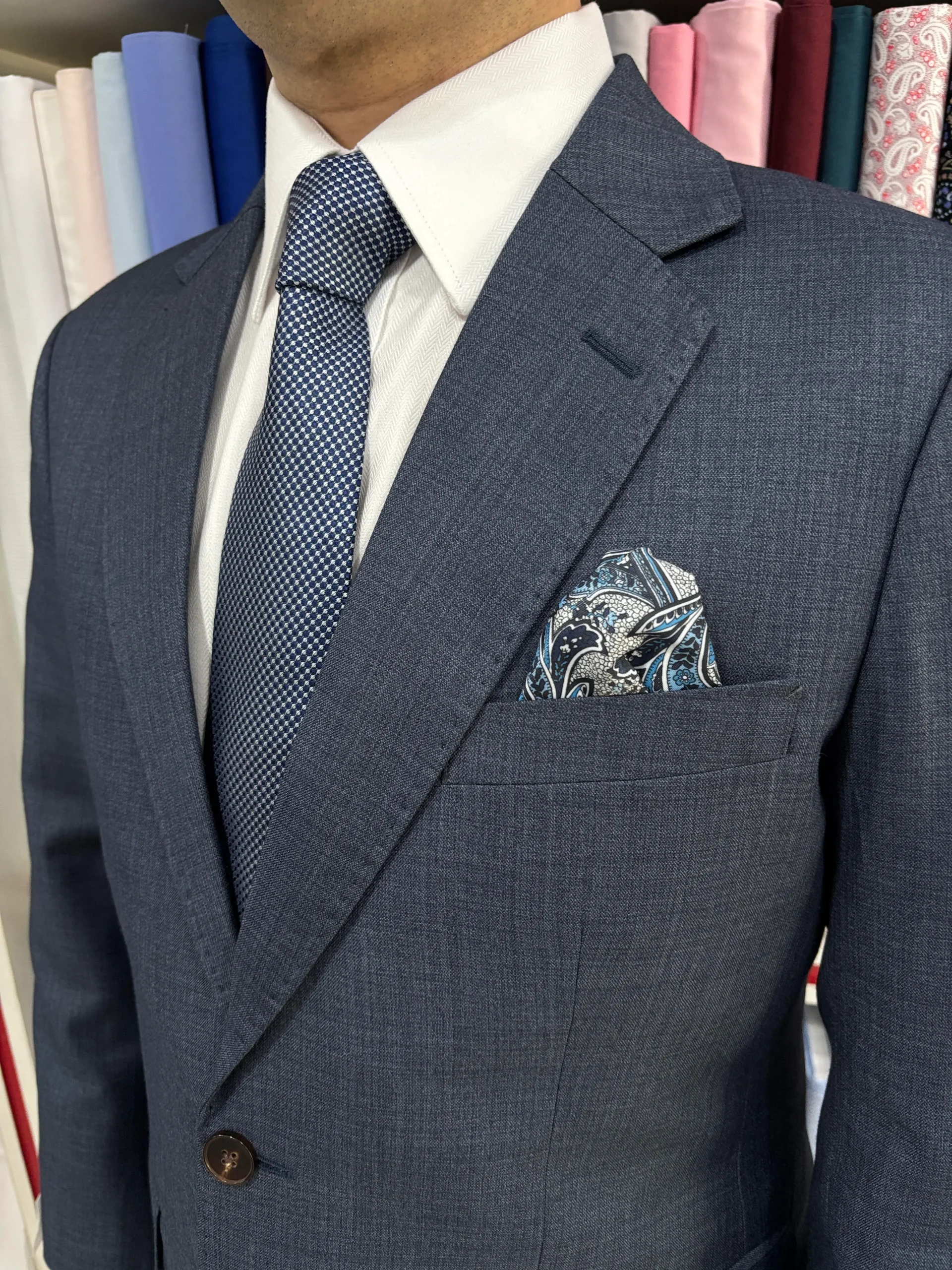
The collar should sit close to the shirt collar without an obvious gap or persistent roll beneath it. Check the back of the neck while standing normally, then move the arms. If a gap appears only in one exaggerated pose, record the condition rather than treating one image as a complete diagnosis.
Ask the fitter to explain the likely cause before prescribing a solution. Collar contact, shoulder slope, jacket balance and posture interact, so altering one visible point without considering the whole jacket can move the problem elsewhere.
Check the Jacket Chest and Waist
Button the jacket as intended and look for a controlled line through the chest and waist. The fronts should not show strong strain radiating from the button, but the absence of every crease is not a realistic universal standard. Shape, cloth, padding, movement and the chosen silhouette all affect the surface.
Check comfort while breathing, sitting and placing your hands where they would normally rest. A closer cut may be an agreed style, but it still needs to perform the actions defined in the order brief. If the jacket feels restrictive, describe where and during which movement rather than saying only that it is “too tight”.
Also check the jacket length and vent behaviour from the side and back. The correct length is partly a style decision, but uneven lift, persistent crossing fronts or vents that remain forced open can justify a technical review.
Check Sleeve Pitch and Sleeve Length
Sleeve pitch is the angle at which the sleeve is set relative to the wearer’s natural arm position. When it does not correspond well, the sleeve may twist or show diagonal folds while the arm is relaxed.
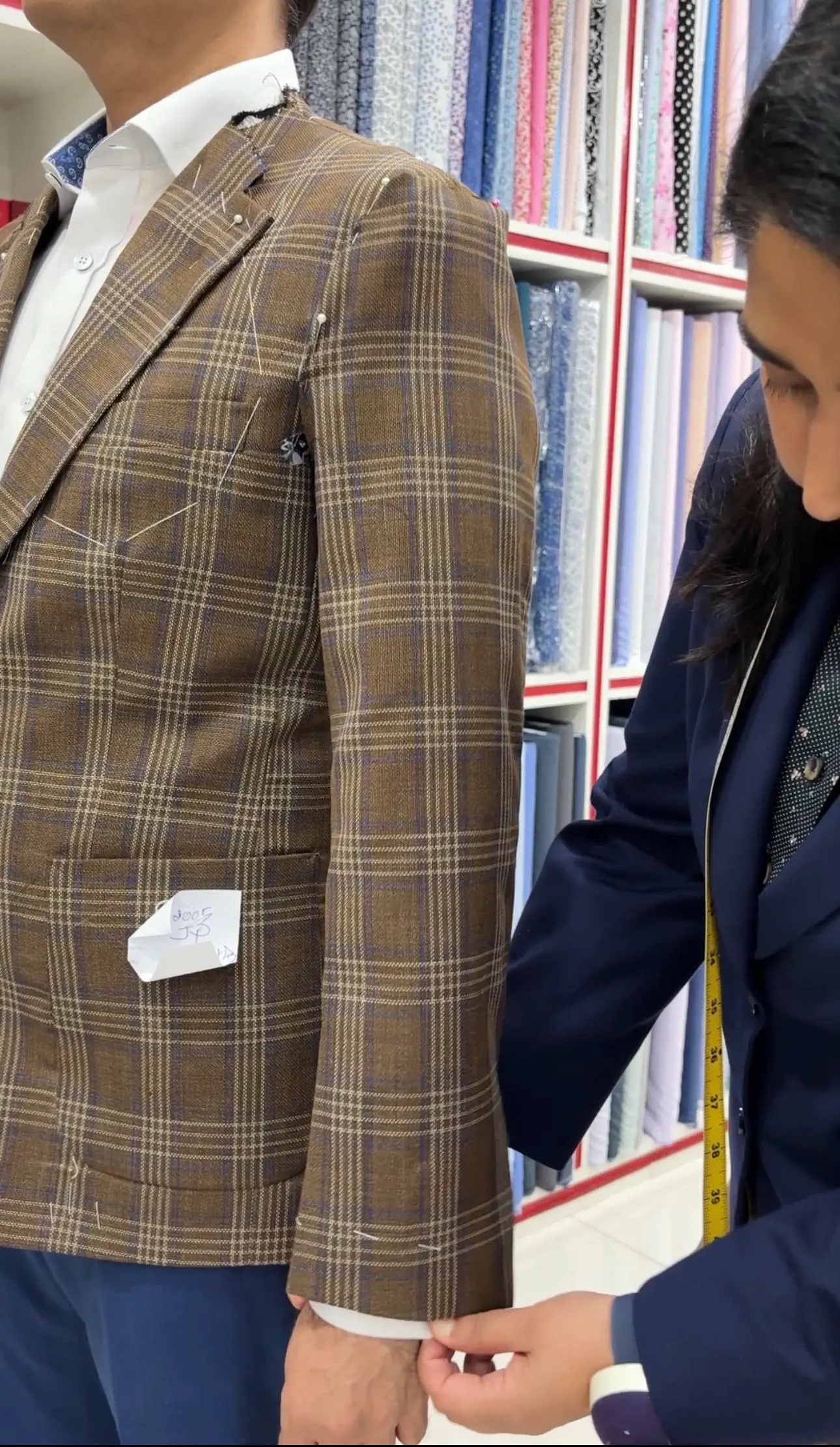
Check both sleeves with the arms hanging naturally. Then bend the elbows and reach forward to test comfort. Sleeve length should be judged with the shirt and intended posture, not from a bare wrist or a borrowed shirt with a different cuff position. Confirm the agreed amount of shirt cuff rather than assuming one fixed measurement suits every style and body.
Check Trouser Waist, Seat and Balance
Trousers should remain comfortable at the intended wearing height and hang cleanly through the seat and legs. Fasten them, stand naturally, sit and walk. Check whether the waistband stays in place without excessive pressure or reliance on a belt to correct the fit.
From the side and back, look for persistent pulling, twisting or collapse that remains under normal conditions. Trouser break—the way the hem meets the shoe—is partly a style preference, so test it with the shoes you expect to wear. The rise, seat, thigh, knee and hem work together; a hem change alone cannot correct every line problem above it.
Inspect Canvas and Internal Construction
Confirm that the garment matches the construction recorded on the order. Common descriptions include fused, half-canvas and full-canvas, but these terms should be applied to specific areas and should not be treated as a universal ranking detached from execution, cloth, climate and budget.
The Savile Row Bespoke Association’s own process description identifies features used by its member houses, including individually made patterns, hand-shaped canvas and hand-set sleeves. It is useful evidence for what that association means by Savile Row bespoke, not a rule that every tailored suit must copy.
Ask the tailor to show what can be inspected without damaging the garment. Do not pull apart seams or rely on an aggressive “pinch test” as proof of the entire construction. A safer check compares the written specification, the tailor’s explanation and observable details.
Inspect Lining, Buttonholes, Seams and Finishing
Finishing quality is best judged for consistency with the approved design. Check that the lining lies securely without obvious loose areas, that buttons are firm, buttonholes accept their buttons cleanly, pockets and vents operate as intended, and hems and seams are tidy.
Inspect under neutral light with clean hands. Look at corresponding left and right details, but first confirm whether any asymmetry was intentional. Pattern matching, edge stitching and button spacing should be judged against the chosen cloth and specification rather than an imagined standard that was never agreed.
Pressing matters because it shapes the final line, but fresh transport creases are not the same as a construction fault. Let the garment hang and ask how it should be cared for before judging a temporary crease. For wool garments, Woolmark’s care guidance recommends following the garment’s care claim and gives guidance on brushing, airing, hanging and pressing woven wool.
Distinguish Fit Problems from Style Preferences
An objective finding concerns whether the garment matches the agreed specification or performs the required movement. A preference concerns whether you now want a different silhouette, length, amount of suppression or decorative detail.
The distinction matters because a new preference after cutting can affect cost, timing and feasibility. It does not mean the preference is unimportant. Record the observation, the original agreement and the proposed change separately so both sides can decide whether the issue is a correction or a revised request.
What Can and Cannot Be Altered Easily?
Alteration difficulty depends on seam allowance, pattern, construction, cloth, the size and location of the change, and the relationship between garment areas. Hems, some waist adjustments and certain sleeve-length changes may be comparatively contained. Shoulder shape, sleeve pitch, jacket balance and major changes across the chest or seat can be more involved.
Do not use this as a promise that any named alteration will be easy. Ask the person responsible for the garment to explain what will be opened, what may change elsewhere, whether a visible mark could remain and how the result will be checked.
Final Quality Inspection Checklist
| Area | Test | Record if unresolved |
|---|---|---|
| Overall balance | Front, side and back in a natural stance | Direction of tilt, lift or crossing and the condition in which it appears |
| Movement | Sit, walk, reach and relax the arms | Location and action that creates restriction |
| Shoulders | Compare both sides without forcing posture | Persistent ridge, collapse or dimple |
| Collar | Check contact with the shirt collar | Gap or roll and whether movement changes it |
| Chest and waist | Button, breathe and sit | Strain, excess or restricted motion |
| Sleeves | Relax arms, bend elbows, check shirt cuff | Twist, pitch, length or mobility concern |
| Trousers | Stand, sit and walk in intended shoes | Waist, rise, seat, leg line or break issue |
| Construction | Compare with the written specification | Any unexplained difference |
| Finishing | Check lining, buttons, buttonholes, seams and hems | Exact location and whether it is intentional |
| Final record | Photograph agreed views and list open items | Owner, action and next checkpoint |
Use the same stance, shirt, shoes and movement when checking a correction. Consistent conditions make before-and-after comparisons more useful.
Frequently Asked Questions
Should a New Tailored Suit Have No Wrinkles at All?
No. Cloth bends over a moving, three-dimensional body, so some folds are normal. Look for persistent strain, twisting or collapse under ordinary conditions rather than demanding a perfectly flat surface in every pose. The cloth, construction, body posture and intended silhouette all affect what is reasonable.
Is a Tight Suit Evidence of a Precise Fit?
No. Precision means the suit follows the agreed silhouette while allowing the movements defined in the brief. A jacket can be close-fitting and still comfortable, or loose and still poorly balanced. Test breathing, sitting, walking and reaching instead of using tightness as the quality test.
Can Every Fit Problem Be Fixed After the Suit Is Finished?
Not necessarily. Feasibility depends on the pattern, allowances, construction, cloth and scale of the change. Ask what the proposed alteration affects elsewhere and how the corrected garment will be tested. Major structural changes may require more work than a local hem or waist adjustment.
Final Takeaway
A reliable inspection moves from the whole garment to individual details, tests normal movement and compares the result with the written order. Record what you observe before suggesting a technical solution, and ask how each correction will be verified.
If you want help describing the fit you prefer, bring style references or a garment you already wear well to Jhasper Fashion’s bespoke tailoring service. The purpose of the conversation is to define observable fit and movement requirements; it does not oblige you to place an order.
Author and Editorial Disclosure
Authors: Dave and Pinky, Co-owners of Jhasper Fashion. About Jhasper Fashion
Last reviewed: 2026-09-26
Editorial disclosure: This educational guide was written and reviewed by Dave and Pinky, co-owners of Jhasper Fashion, drawing on their practical experience in tailoring consultations. It provides general guidance for comparing tailoring services and does not claim that one tailor is suitable for every customer.